Greatest Love Ever


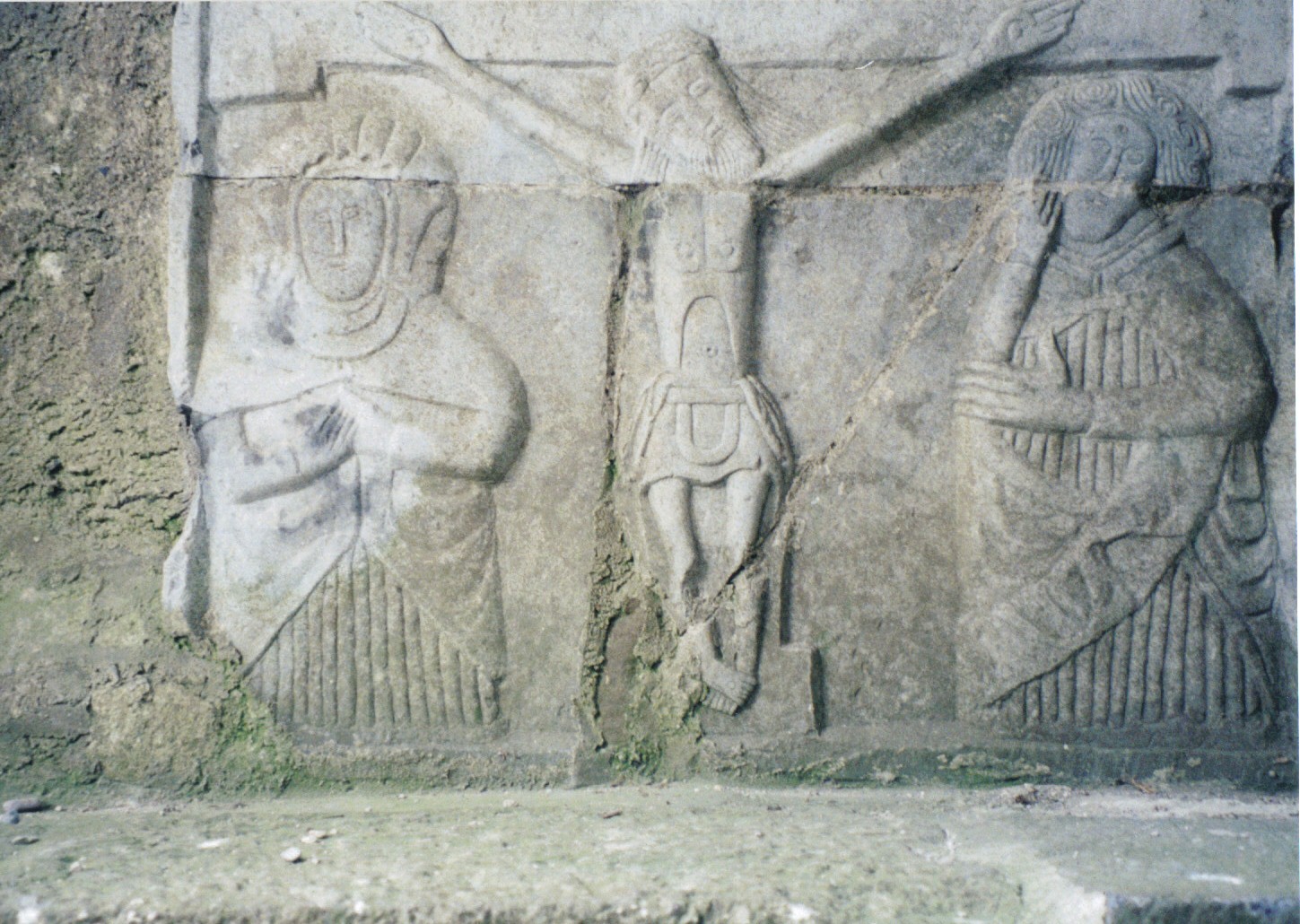
An amazing carving of Jesus at the Rock of Cashel, County Tipperary.

“Love each other as I have loved you.  Greater love has no one than this, that he lay down his life for his friends.” – Jesus  (John 15:12-13)

I’m so thankful for this amazing love and grace.  Have a blessed weekend.

Slainte, Lisa

P.S. If you want to see more pictures of the Rock of Cashel, please visit http://www.bpmlegal.com/ireland/cashel.htm.  Mike has wonderful pictures there to view.

Feeling, Seeing, Hearing, No Words

This isn’t quite me, yet! 🙂

Some mornings you wake up, ready to write your new blog.  You log on, and stare at the “Add New Post” heading.  Nothing.  No theme or topic pops up into your mind.  Uh-oh…it’s going to be a picture only or a video day, you say to yourself.  But, rebelliously, you don’t want that; you want to write something.  You look around…blue skies, green trees, bright sunshine.  All very beautiful and inspiring.  You hear amazing music in your mind, and words and musical textures swirl around, waiting to be discussed at large on the blog.  Still nothing.  You feel a myriad of feelings, some good, some grateful, some confused and anxious.  But you don’t want to share all of that today.

So I continue to stare, and mindlessly type these words, and this is what you get.

Yeah, buddy.

“Sometimes you feel like a nut; sometimes you don’t.”  (Almond Joy commercial, 1970’s)

“We do not know what we ought to pray for, but the Spirit himself intercedes for us with groans that words cannot express.”  (Romans 8:26b)

Enjoy your day, feeling, seeing and hearing…even if you have no words to express it all.  Slainte, Lisa

*Images provided via Google Images.*
View From a Beehive (Hut, That Is)

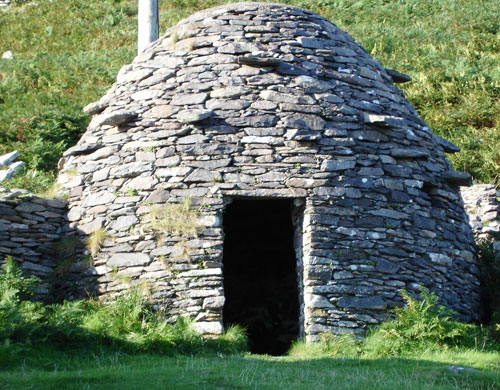
beehive hut

View From Inside a Beehive Hut, Dingle

Beehive huts can be found in various parts of Ireland, especially in Dingle.    Resembling….wait for it….beehives! in shape, and oft times clustered together in groupings.  www.celticquill.com has a great article on these amazing structures:  “Clocháns are dry-stone buildings dating from c.2000 BC. They are usually round in shape, but rectangular huts are known as well. What gives these huts their distinctive appearance is a building technique known as corbelling, i.e. the layering of stones, with each layer bending slightly closer and narrower towards the peak. Stones were laid with an outward and downward tilt to shed water, making these huts watertight.”

Photo courtesy of http://www.celticquill.com

People lived in them, such as visitors or monks, and later on, they were used for farm animals or storage.  When we visited some in Dingle, we were amazed by two things:  how low the door entrances were (my husband whacked his poor head on one), and how amazingly perfect and dry and intact they still were after all these hundreds of years.  Talk about well-built to stand the test of time.  To quote many a time-traveled elder:  “They don’t make ’em like they used to.”   🙂  Slainte, Lisa

A wonderful story that I thought worth sharing… Slainte, Lisa

Brad Strait's avatarceltic straits

After dinner, a man was asked by his children to tell them a story.

“What would you like to hear?” he asked his children.

“A story about a giant!” his youngest son exclaimed.

“Yes. Yes! A big giant!” exclaimed the kids.

After a short pause, the dad began his story.

“Once upon a time there were two small boys who asked their fathers to take them to see the great parade that passed through the village every ten years. The fathers, remembering the parade from when they were boys, quickly agreed, and the next morning the four of them set out together.

“As they approached the parade route, people started to push in from all sides, and the crowd grew thick. When the people along the way became almost a wall, the small boys became pinned in the forest of legs and backs.  So each father lifted his son and…

View original post 352 more words